Yeltsin died Monday at 76, a Kremlin official announced. The Interfax news agency quoted an unidentified medical source as saying that he died of heart failure.
Like Peter the Great, the 18th-century czar he once mentioned as his model, Yeltsin was no towering democrat. In launching a war against the breakaway southern region of Chechnya in 1994, he was responsible for the violent deaths of more Russian citizens than any Kremlin leader since Joseph Stalin. As president, he tolerated -- even authorized -- the excesses of a system in some ways as corrupt and morally adrift as the one it replaced.
humor,Washington Post,BBC News,Reuters,technology,business,humor,images,weird news,jokes
Monday, April 23, 2007

Friday, April 13, 2007
Employers are checking online personal information
This news is for people who are posting personal information online and discussing
their problems in their work in their blogs.
humor,Washington Post,BBC News,Reuters,technology,business,humor,images,weird news,jokes
their problems in their work in their blogs.
Want a job? Clean up your Web act
By Tim Ferguson, Special to CNET News.com
Employers are increasingly checking out online personal information about candidates when making recruitment decisions.
Net reputations built up through online activities--such as blogging, posting videos to YouTube, or using social networks such as Facebook and MySpace.com--can have a significant effect when applying for a job, according to a report from business social network Viadeo.
According to the research, released March 28, one in five employers finds information about candidates on the Internet, and 59 percent of those said it influences recruitment decisions.
A fourth of human resources decision makers said they had rejected candidates based on personal information found online. Most people, however, remain unaware of the effect their Net reputation can have on their job prospects.
humor,Washington Post,BBC News,Reuters,technology,business,humor,images,weird news,jokes
Wednesday, April 04, 2007
Diabetic Mr. Universe Tussled with the Police
Diabetic Mr. Universe suspected to be drunk, tussled withh the police
diabetic recipes,chicken recipes,meat recipes,beef recipes,vegetables recipes,recipes,special diets,low sodium,calories
A reigning Mr. Universe was charged Tuesday with resisting arrest and assault on a police officer after a scuffle at a Redwood City movie theater in which police mistakenly thought the diabetic bodybuilder was drunk as he was slipping into insulin shock.
Doug Burns faces up to a year in county jail if convicted in an incident that has drawn sharp criticism from some diabetes experts who believe officers overreacted to a medical situation.
"Doug is the consummate gentleman," said Jeff Hitchcock, founder of Children With Diabetes, an educational support group that helps families of children with diabetes. "The treatment he received by the police is outrageous."
A Redwood City Police Department spokesman defended the officers.
"It's unfortunate that this event occurred, but I think the officers acted properly in the circumstances that they were faced with," police Capt. Chris Cesena said. "Our personnel were not given enough time to assess Mr. Burn's personal condition."
Officers were called to Century 20 theater in downtown Redwood City at about 7:30 p.m. Sunday after a security guard, believing the disoriented Burns was under the influence of drugs or alcohol, escorted him outside, police said. When two officers arrived, the powerfully built Burns, 43, allegedly pushed one and then assumed a "fighting stance," police said.
One officer used pepper spray in an attempt to subdue Burns but with no effect. Both officers then wrestled Burns to the ground and needed three more officers, who arrived as backup, to handcuff him, police said. During the scuffle, Burns suffered small cuts to his nose and forehead, while one officer received a small cut to his finger and another officer suffered an arm injury and was placed on medical leave, Cesena said.
Burns, a Redwood City father of three, is the 2006-07 Natural Mr. Universe, the winner of a competition that stresses bodybuilding without the use of performance-enhancing drugs. He often speaks publicly about his diabetes to raise awareness of the disease.
He disputed the police version of the incident, saying: "That story is completely out of line."
Burns, diagnosed with diabetes at age 7, said he realized his blood sugar was low shortly after entering the theater. Burns tried to make his way to the snack counter on the second floor but began losing his vision. Burns said he wasn't able to stand properly as a security guard escorted him down the theater escalator.
"The last recollection I have is leaning against the security guard as he's bringing me out and perspiring a lot," Burns said. "To say that I confronted them in a fighting stance? I couldn't even stand up. I couldn't see."
Burns said he remembers nothing outside the theater, and the first time he recalls seeing police officers was as they stood over him while a paramedic treated him.
Prosecutors decided to file the misdemeanor charges against Burns based on the police reports, Chief Deputy District Attorney Steve Wagstaffe said. He pointed to a case several years ago in which the district attorney's office charged a man in a fatal car crash but later dropped the charges after medical evidence showed he had been in a diabetic coma at the time.
"As we read the police reports, we're not seeing a similar thing here," Wagstaffe said. "If (Burns) ultimately presents us with information to that effect -- that he was unconscious of what had occurred -- then we will consider it."
Diabetics suffering from low blood sugar levels -- or hypoglycemia -- often become confused and experience blurry or double vision, nervousness, irritability or even aggression, according to the U.S. National Library of Medicine and the National Institutes of Health.
"They closely mimic drunkenness," Hitchcock said. "The presumption that someone is drunk when they are behaving that way is a bad assumption."
They can become desperate in their movements as they attempt to get sugar-rich foods while their body is simultaneously shutting down, said Dr. Joseph Prendergast, a veteran Redwood City endocrinologist.
"People get very anxious because they are seeking some help," Prendergast said. "It happens to wives, it happens to kids who have known dad for years, and it also happens at snack food counters in theaters."
Cesena said the officers had no way of knowing Burns was diabetic or slipping into insulin shock until after he was arrested. They did not notice whether Burns had a MedicAlert bracelet or any other indication he was diabetic, he said. Burns said he was not sure whether he had his MedicAlert bracelet on at the time.
After Burns was cuffed, police called medics to treat him for the pepper spray, and he told them he was diabetic and suffering from low blood sugar, Cesena said. Burns was taken to San Mateo Medical Center for treatment. He was cited on the misdemeanors and was released without being booked into jail, police said.
He is scheduled to be arraigned May 2, and prosecutors will not seek to have bail set in the case, Wagstaffe said.
diabetic recipes,chicken recipes,meat recipes,beef recipes,vegetables recipes,recipes,special diets,low sodium,calories
Monday, February 05, 2007
Korean Business Tycoon Convicted for High Profile Corruption
Ordinary people would look for reasons why rich and successful people would embezzle large amount of cash. How are they going to be caught when they control the whole organization?
This news article about Hyundai Motor Co. Chairman Mong-Koo explained the what, the why and what now of the beleaguered business tycoon.
Read the entire story here.
breaking-news,Washington Post ,BBC News ,Reuters,technology,business
This news article about Hyundai Motor Co. Chairman Mong-Koo explained the what, the why and what now of the beleaguered business tycoon.
Hyundai Motor Co. Chairman Chung Mong-koo, handed a surprise three-year jail term for high-profile corruption, won't be donning prison garb anytime soon and for now remains in control of the troubled, yet expanding automaker.
Chung, convicted Monday for embezzling the equivalent of more than $100 million in company funds and other charges, plans to appeal the ruling, a process expected to take from six months to two years. He will be free during that time to run the company.
He must use that window of opportunity, analysts say, to reform an organization beset by woes ranging from its authoritarian management structure, chronic labor troubles, and the need to better compete in overseas markets with more harmonious Japanese competitors.
"Mr. Chung has to make the management system change," said Yong Dae-in, an auto industry analyst at Goodmorning Shinhan Securities in Seoul, emphasizing it must become more decentralized and less dependent on him.
The weakness of Hyundai's top-down operating style came into focus in April when Chung was arrested, jailed and grilled by prosecutors for two months before being allowed back into the boardroom following release on bail.
During that time the company, along with affiliate Kia Motors Corp., floundered as decisions related to overseas plants were delayed and problems with its strike-prone labor union festered.
Read the entire story here.
breaking-news,Washington Post ,BBC News ,Reuters,technology,business
Sunday, January 21, 2007
Malaysian Flooding
Bayi who is from Malaysia sent me these pictures of flooding in his country.
1. Businesses are closed

2. They use banca for means of transportation within the city.

3. Streets are deep in water so only small boats can ferry people.

4. Even the main roads are gone.

5. They're lucky if the water is only knee deep high.

6. Vehicles caught in raging water have to be pushed or towed.

1. Businesses are closed

2. They use banca for means of transportation within the city.

3. Streets are deep in water so only small boats can ferry people.

4. Even the main roads are gone.
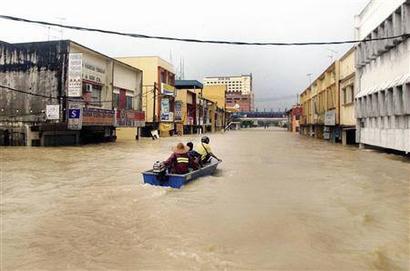
5. They're lucky if the water is only knee deep high.

6. Vehicles caught in raging water have to be pushed or towed.

Sunday, January 07, 2007
Google Millionaires retiring
When you become millionaire what are you going to do? Work until your retirement age?
Retire and set up a business? Go back to school?
The millionaires that the legendary company Google have decided to cash in their millions and put up their own. This news article from San Francisco Chronicle tells us what the old timers in Google did.
O Googlers, where art thou?
Some employees found instant riches in the Internet search company's initial public offering -- affording them the luxury of pursuing new dreams
Who in their right mind would leave a job at Google Inc., a company legendary for pampering workers with free annual ski trips and gourmet food?
Well, it turns out plenty of people do. And many of them are some of the Web giant's earliest employees.
Extremely wealthy from stock options that soared in value, 100 of Google's first 300 workers have quietly resigned to go to law school, help poor shopkeepers get loans or simply to live the good life. Although hardly a mass exodus, the numbers are adding up, scattering what some employees considered their second families.
For Google, the departures present a new hurdle. Enticing as many old-timers to stay as possible is a priority because, with each farewell party, a piece of the company's institutional knowledge and culture is lost.
"We take a lot of time and care, in particular with our old-timers," said Stacy Sullivan, Google's human resources director. "It's so important that we are paying attention to whether they're being challenged."
What's happened to Google following its blockbuster initial public offering in 2004 echoes several of technology's other titans, such as Yahoo Inc., eBay Inc. and Microsoft Corp. But because of Google's celebrity and generous perks, the question remained whether the pattern would play out again.
Google's initial public offering immediately minted more than 900 millionaires at the company, by one estimate. Even many rank-and-file employees became instantly wealthy. The total has grown over time as its shares have catapulted in value.
Financial freedom gave the former Googlers in this article wide latitude in deciding what to do with their lives. The reasons for leaving are many: Alack of new challenges, ambivalence about the company's growth and a desire for a career change are just a few.
But virtually all of the former Googlers fondly recall helping build what is now the most popular search engine, particular during the early years when they felt like they had a big impact and employees knew all their colleagues' names. Those cheery memories, however, are mixed with flashbacks of late nights at the office, spending Valentine's dinner in the company cafeteria and strife.
Google,stock option
Retire and set up a business? Go back to school?
The millionaires that the legendary company Google have decided to cash in their millions and put up their own. This news article from San Francisco Chronicle tells us what the old timers in Google did.
O Googlers, where art thou?
Some employees found instant riches in the Internet search company's initial public offering -- affording them the luxury of pursuing new dreams
Who in their right mind would leave a job at Google Inc., a company legendary for pampering workers with free annual ski trips and gourmet food?
Well, it turns out plenty of people do. And many of them are some of the Web giant's earliest employees.
Extremely wealthy from stock options that soared in value, 100 of Google's first 300 workers have quietly resigned to go to law school, help poor shopkeepers get loans or simply to live the good life. Although hardly a mass exodus, the numbers are adding up, scattering what some employees considered their second families.
For Google, the departures present a new hurdle. Enticing as many old-timers to stay as possible is a priority because, with each farewell party, a piece of the company's institutional knowledge and culture is lost.
"We take a lot of time and care, in particular with our old-timers," said Stacy Sullivan, Google's human resources director. "It's so important that we are paying attention to whether they're being challenged."
What's happened to Google following its blockbuster initial public offering in 2004 echoes several of technology's other titans, such as Yahoo Inc., eBay Inc. and Microsoft Corp. But because of Google's celebrity and generous perks, the question remained whether the pattern would play out again.
Google's initial public offering immediately minted more than 900 millionaires at the company, by one estimate. Even many rank-and-file employees became instantly wealthy. The total has grown over time as its shares have catapulted in value.
Financial freedom gave the former Googlers in this article wide latitude in deciding what to do with their lives. The reasons for leaving are many: Alack of new challenges, ambivalence about the company's growth and a desire for a career change are just a few.
But virtually all of the former Googlers fondly recall helping build what is now the most popular search engine, particular during the early years when they felt like they had a big impact and employees knew all their colleagues' names. Those cheery memories, however, are mixed with flashbacks of late nights at the office, spending Valentine's dinner in the company cafeteria and strife.
Google,stock option
Saturday, January 06, 2007
Embryo Bank -bank for designer babies
We have all sorts of banks, thrift banks, commercial banks, blood banks and other banks where an item can be stored and withdrawn. Here comes embryo bank.
Excerpt of the news from Washington Post
'Embryo Bank' Stirs Ethics Fears
Firm Lets Clients Pick Among Fertilized Eggs
Embryo bank,
Washington Post
Excerpt of the news from Washington Post
'Embryo Bank' Stirs Ethics Fears
Firm Lets Clients Pick Among Fertilized Eggs
A Texas company has started producing batches of ready-made embryos that single women and infertile couples can order after reviewing detailed information about the race, education, appearance, personality and other characteristics of the egg and sperm donors.
The Abraham Center of Life LLC of San Antonio, the first commercial dealer making embryos in advance for unspecified recipients, was created to help make it easier and more affordable for clients to have babies that match their preferences, according to its founder.
"We're just trying to help people have babies," said Jennalee Ryan, who arranged for an egg donor to start medical treatments to produce a second batch of embryos this week. "For me, that's what this is all about: helping make babies."
But the embryo brokerage, which calls itself "the world's first human embryo bank," raises alarm among some fertility experts and bioethicists, who say the service marks another disturbing step toward commercialization of human reproduction and "designer babies."
Embryo bank,
Washington Post
Wednesday, December 27, 2006
Ex-US President Gerald Ford Died at age 93

Gerald Rudolph Ford Jr., 93, who became the 38th president of the United States as a result of some of the most extraordinary events in U.S. history and sought to restore the nation's confidence in the basic institutions of government, has died. His wife, Betty, reported the death in a statement last night.
"My family joins me in sharing the difficult news that Gerald Ford, our beloved husband, father, grandfather and great grandfather has passed away at 93 years of age," Betty Ford said in a brief statement issued from her husband's office in Rancho Mirage, Calif. "His life was filled with love of God, his family and his country."
Read the news here.
breaking-news,Washington Post ,BBC News ,Reuters,technology,business
Tuesday, December 26, 2006
Diabetics Confront a Tangle of Workplace Laws
Is there such a thing as diabetic discrimination?
Read this excerpt of a news article from New Yok Times.
MINNEAPOLIS — John Steigauf spent more than a decade fiddling with the innards of those huge United Parcel Service trucks until an icy day two years ago when the company put him on leave from his mechanic's job. A supervisor escorted him off the premises.
His work was good. He hadn't socked the boss or embezzled money. It had to do with what was inside him: diabetes.
U.P.S. framed it as a safety issue: Mr. Steigauf's blood sugar might suddenly plummet while he tested a truck, causing him to slam into someone.
Mr. Steigauf considered it discrimination, a taint that diabetes can carry. "I was regarded as a damaged piece of meat," he said. "It was like, 'You're one of those, and we can't have one of those.' "
With 21 million American diabetics, disputes like this have increasingly rippled through the workplace:
¶A mortgage loan officer in Oregon was denied permission to eat at her desk to stanch her sugar fluctuations, and eventually was fired.
¶A Sears lingerie saleswoman in Illinois with nerve damage in her leg quit after being told she could not cut through a stockroom to reach her department.
¶A worker at a candy company in Wisconsin was fired after asking where he could dispose of his insulin needles.
In each instance, diabetics contend that they are being blocked by their employers from the near-normal lives their doctors say are possible. But the companies say they are struggling, too, with confusion about whether diabetes is a legitimate disability and with concern about whether it is overly expensive, hazardous and disruptive to accommodate the illness.
The debate will probably intensify. The number of diabetics in America swelled by 80 percent in the past decade. Experts say the disease is on its way to becoming a conspicuous fact of life in the nation’s labor force, raising all sorts of issues for workers and managers.
Even an outspoken advocate for diabetics like Fran Carpentier, a Type 1 diabetic and a senior editor at Parade magazine, understands the implications for business. "Knowing what it's like to live with the disease hour by hour, day by day, I wonder if I owned my own company if I would hire someone with diabetes," she said. "I'm being bluntly honest. And it kills me to say this."
breaking-news,Washington Post ,BBC News ,Reuters,technology,business,diabetes
Read this excerpt of a news article from New Yok Times.
MINNEAPOLIS — John Steigauf spent more than a decade fiddling with the innards of those huge United Parcel Service trucks until an icy day two years ago when the company put him on leave from his mechanic's job. A supervisor escorted him off the premises.
His work was good. He hadn't socked the boss or embezzled money. It had to do with what was inside him: diabetes.
U.P.S. framed it as a safety issue: Mr. Steigauf's blood sugar might suddenly plummet while he tested a truck, causing him to slam into someone.
Mr. Steigauf considered it discrimination, a taint that diabetes can carry. "I was regarded as a damaged piece of meat," he said. "It was like, 'You're one of those, and we can't have one of those.' "
With 21 million American diabetics, disputes like this have increasingly rippled through the workplace:
¶A mortgage loan officer in Oregon was denied permission to eat at her desk to stanch her sugar fluctuations, and eventually was fired.
¶A Sears lingerie saleswoman in Illinois with nerve damage in her leg quit after being told she could not cut through a stockroom to reach her department.
¶A worker at a candy company in Wisconsin was fired after asking where he could dispose of his insulin needles.
In each instance, diabetics contend that they are being blocked by their employers from the near-normal lives their doctors say are possible. But the companies say they are struggling, too, with confusion about whether diabetes is a legitimate disability and with concern about whether it is overly expensive, hazardous and disruptive to accommodate the illness.
The debate will probably intensify. The number of diabetics in America swelled by 80 percent in the past decade. Experts say the disease is on its way to becoming a conspicuous fact of life in the nation’s labor force, raising all sorts of issues for workers and managers.
Even an outspoken advocate for diabetics like Fran Carpentier, a Type 1 diabetic and a senior editor at Parade magazine, understands the implications for business. "Knowing what it's like to live with the disease hour by hour, day by day, I wonder if I owned my own company if I would hire someone with diabetes," she said. "I'm being bluntly honest. And it kills me to say this."
breaking-news,Washington Post ,BBC News ,Reuters,technology,business,diabetes
Friday, December 15, 2006
Mice in the Plane
We heard the news about snakes and other exotic animals being smuggled thru the
plane. But this is the first time, I heard of mice in a plane.
Mass mice escape hits Saudi plane

PhotocreditAP
More than 100 passengers on a Saudi plane were left panic-stricken by the unexpected appearance of furry fellow flyers - dozens of mice.
The small rodents - about 80 in total, according to a local newspaper - escaped from the bag of a man travelling on the domestic flight.
An airline official said the aircraft was at 28,000 feet (8,500m) when mice began scurrying around the cabin.
Some of the mice fell on passengers' heads, Al-Hayat newspaper reports.
The incident occurred on a Saudi Arabian Airlines flight from the capital, Riyadh, to north-eastern town of Tabuk.
The flight landed safely and the bag's owner was detained by police investigating how he managed to get the mice onto the plane.
No explanation was given for the man's live cargo.
Story from BBC NEWS
breaking-news,Washington Post ,BBC News ,Reuters,technology,business
plane. But this is the first time, I heard of mice in a plane.
Mass mice escape hits Saudi plane

PhotocreditAP
More than 100 passengers on a Saudi plane were left panic-stricken by the unexpected appearance of furry fellow flyers - dozens of mice.
The small rodents - about 80 in total, according to a local newspaper - escaped from the bag of a man travelling on the domestic flight.
An airline official said the aircraft was at 28,000 feet (8,500m) when mice began scurrying around the cabin.
Some of the mice fell on passengers' heads, Al-Hayat newspaper reports.
The incident occurred on a Saudi Arabian Airlines flight from the capital, Riyadh, to north-eastern town of Tabuk.
The flight landed safely and the bag's owner was detained by police investigating how he managed to get the mice onto the plane.
No explanation was given for the man's live cargo.
Story from BBC NEWS
breaking-news,Washington Post ,BBC News ,Reuters,technology,business
Thursday, December 14, 2006
Skilling Begins Sentence for Enron Malfeasances
The once-upon-a-time top honcho of Enron, Harvard graduate, finance wiz started serving his 24 year month sentence where he is going to earn a few dollars per day working 7 1/2 hours as groundskeeper, food service worker or warehouseman.
Skilling Begins Sentence for Enron Malfeasances
By Carrie Johnson
Washington Post Staff Writer
Thursday, December 14, 2006; Page D01
Former Enron chief executive Jeffrey K. Skilling reported to a low-security federal prison in Minnesota yesterday to start serving a 24-year, six-month sentence for his role in one of history's biggest corporate scandals.
Skilling arrived at the facility in Waseca, about 75 miles south of Minneapolis, at 1:07 p.m. EST. Accompanying him in a sport-utility vehicle were his wife, Rebecca, his longtime assistant Sherri Sera and his younger brother Mark. Under federal guidelines, Skilling, 53, must serve at least 85 percent of his sentence -- or more than two decades. He is appealing his conviction by a jury in May on 19 counts of fraud, making false statements and conspiracy.
Read the entire story here.
breaking-news,Washington Post ,BBC News ,Reuters,technology,business
Skilling Begins Sentence for Enron Malfeasances
By Carrie Johnson
Washington Post Staff Writer
Thursday, December 14, 2006; Page D01
Former Enron chief executive Jeffrey K. Skilling reported to a low-security federal prison in Minnesota yesterday to start serving a 24-year, six-month sentence for his role in one of history's biggest corporate scandals.
Skilling arrived at the facility in Waseca, about 75 miles south of Minneapolis, at 1:07 p.m. EST. Accompanying him in a sport-utility vehicle were his wife, Rebecca, his longtime assistant Sherri Sera and his younger brother Mark. Under federal guidelines, Skilling, 53, must serve at least 85 percent of his sentence -- or more than two decades. He is appealing his conviction by a jury in May on 19 counts of fraud, making false statements and conspiracy.
Read the entire story here.
breaking-news,Washington Post ,BBC News ,Reuters,technology,business
Wednesday, December 13, 2006
Dr. Jack Kevorkian to be paroled in June 2007
I did not know his whereabouts until I read this news. Several years ago, he was always in the newspaper until he was convicted for his practice of assisting suicide.
LANSING, Michigan (AP) -- After more than eight years in prison, a frail Dr. Jack Kevorkian will be paroled in June with a promise that he won't assist in any more suicides, a prison spokesman said Wednesday.
Leo Lalonde, the corrections spokesman, would not provide further details.
Kevorkian, once the nation's most vocal advocate of assisted suicide for the terminally ill, is serving a 10- to 25-year sentence for second-degree murder in the 1998 poisoning of Thomas Youk, 52, Oakland County man with Lou Gehrig's disease. Michigan banned assisted suicide in 1998.
Youk's death was videotaped and shown on CBS' "60 Minutes."
Kevorkian, who claimed to have assisted in at least 130 deaths in the 1990s, called it a mercy killing.
Mayer Morganroth, Kevorkian's attorney, said this summer that Kevorkian, now 78, was suffering from hepatitis C and diabetes, that his weight had dropped to 113 pounds and that he had less than a year to live.
Read the entire news here.
LANSING, Michigan (AP) -- After more than eight years in prison, a frail Dr. Jack Kevorkian will be paroled in June with a promise that he won't assist in any more suicides, a prison spokesman said Wednesday.
Leo Lalonde, the corrections spokesman, would not provide further details.
Kevorkian, once the nation's most vocal advocate of assisted suicide for the terminally ill, is serving a 10- to 25-year sentence for second-degree murder in the 1998 poisoning of Thomas Youk, 52, Oakland County man with Lou Gehrig's disease. Michigan banned assisted suicide in 1998.
Youk's death was videotaped and shown on CBS' "60 Minutes."
Kevorkian, who claimed to have assisted in at least 130 deaths in the 1990s, called it a mercy killing.
Mayer Morganroth, Kevorkian's attorney, said this summer that Kevorkian, now 78, was suffering from hepatitis C and diabetes, that his weight had dropped to 113 pounds and that he had less than a year to live.
Read the entire news here.
Monday, December 11, 2006
Chile's Gen Pinochet dies at 91
Chile's Gen Pinochet dies at 91
Gen Pinochet celebrated his 91st birthday last month
Gen Pinochet's life
Chile's former military leader Augusto Pinochet has died in hospital aged 91. He had been thought to be recovering after a heart attack a week ago.
Gen Pinochet took power in a 1973 coup, and more than 3,000 people were killed or "disappeared" in his 17-year rule.
He was accused of dozens of human rights abuses as well as fraud but poor health meant he never faced trial.
No state funeral or national mourning has been authorised. He will be buried with military honours on Tuesday.
"The government has authorised flags to fly at half-mast at army facilities," government spokesman Ricardo Lagos Weber said.
Thousands of anti-Pinochet protesters took to the streets in the centre of the capital, Santiago, with tear gas and water cannon used to disperse crowds.
Cheering opponents of Gen Pinochet attempted to reach the presidential palace, but found police barring their way.
Sporadic clashes broke out, with Chilean TV showing images of fires burning along one of the city's main avenues.
What saddens me is that this criminal has died without having been sentenced
Hugo Gutierrez
Human rights lawyer
Santiago's military hospital said Gen Pinochet passed away at 1415 local time (1715GMT).
Hospital spokesman Dr Juan Ignacio Vergara said that shortly beforehand, he "suffered grave and unexpected setbacks" requiring him to be moved into intensive care unit.
"We administered all the possible procedures but were not able to resuscitate the general," Dr Vergara said.
"He died surrounded by his family."
After last week's acute heart attack, the general underwent a procedure to unblock an artery, and received the last rites from a Catholic priest.
HAVE YOUR SAY
I hope my country can find peace after his death. Reconciliation is the key
Veronica, Santiago, Chile
But in the days afterwards his condition had been thought to be improving.
Chilean newspaper La Tercera de la Hora Online says dozens of supporters who had been keeping a vigil outside the hospital were weeping and praying following the general's death.
It is expected they will be joined by other supporters as the news spreads.
'Loved by many'
Opponents have expressed anger that Gen Pinochet died without justice being done over the charges that had been brought.
"What saddens me is that this criminal has died without having been sentenced and I believe the responsibility the state bears in this has to be considered", human rights lawyer Hugo Gutierrez told La Tercera Online.
Despite his human rights record, many Chileans loved him and said he saved the country from Marxism.
But even many loyal supporters abandoned him after it became clear in 2004 that he had stolen about $27m in secret offshore bank accounts that were under investigation at the time of his death, the BBC's Daniel Schweimler says.
There were also allegations that Gen Pinochet and his son Marco Antonio Pinochet made money from cocaine smuggling, charges which the family denied.
'Political responsibility'
In September 1973, Gen Pinochet led the armed forces in a dramatic coup against the democratically elected Marxist government of Salvador Allende.
Close to the end of my days, I want to make clear that I hold no rancour towards anybody, that I love my country above all else
Recent Pinochet statement
The violence of the uprising and the oppression that followed shook the world. He went on to become one of South America's best-known military rulers of the 1970s and 80s.
Earlier in November, Gen Pinochet was placed under house arrest over the abduction of two people in 1973.
The charges - the latest in a series - related to the Caravan of Death, a military operation to remove opponents of his rule.
In a statement read by his wife on his 91st birthday, Gen Pinochet said he accepted "political responsibility" for acts committed during his rule.
"Today, close to the end of my days, I want to make clear that I hold no rancour towards anybody, that I love my country above all else," his statement said.
Story from BBC NEWS:
http://news.bbc.co.uk/go/pr/fr/-/2/hi/americas/6167237.stm
Published: 2006/12/11 00:53:29 GMT
breaking-news,Washington Post ,BBC News ,Reuters,technology,business
Gen Pinochet celebrated his 91st birthday last month
Gen Pinochet's life
Chile's former military leader Augusto Pinochet has died in hospital aged 91. He had been thought to be recovering after a heart attack a week ago.
Gen Pinochet took power in a 1973 coup, and more than 3,000 people were killed or "disappeared" in his 17-year rule.
He was accused of dozens of human rights abuses as well as fraud but poor health meant he never faced trial.
No state funeral or national mourning has been authorised. He will be buried with military honours on Tuesday.
"The government has authorised flags to fly at half-mast at army facilities," government spokesman Ricardo Lagos Weber said.
Thousands of anti-Pinochet protesters took to the streets in the centre of the capital, Santiago, with tear gas and water cannon used to disperse crowds.
Cheering opponents of Gen Pinochet attempted to reach the presidential palace, but found police barring their way.
Sporadic clashes broke out, with Chilean TV showing images of fires burning along one of the city's main avenues.
What saddens me is that this criminal has died without having been sentenced
Hugo Gutierrez
Human rights lawyer
Santiago's military hospital said Gen Pinochet passed away at 1415 local time (1715GMT).
Hospital spokesman Dr Juan Ignacio Vergara said that shortly beforehand, he "suffered grave and unexpected setbacks" requiring him to be moved into intensive care unit.
"We administered all the possible procedures but were not able to resuscitate the general," Dr Vergara said.
"He died surrounded by his family."
After last week's acute heart attack, the general underwent a procedure to unblock an artery, and received the last rites from a Catholic priest.
HAVE YOUR SAY
I hope my country can find peace after his death. Reconciliation is the key
Veronica, Santiago, Chile
But in the days afterwards his condition had been thought to be improving.
Chilean newspaper La Tercera de la Hora Online says dozens of supporters who had been keeping a vigil outside the hospital were weeping and praying following the general's death.
It is expected they will be joined by other supporters as the news spreads.
'Loved by many'
Opponents have expressed anger that Gen Pinochet died without justice being done over the charges that had been brought.
"What saddens me is that this criminal has died without having been sentenced and I believe the responsibility the state bears in this has to be considered", human rights lawyer Hugo Gutierrez told La Tercera Online.
Despite his human rights record, many Chileans loved him and said he saved the country from Marxism.
But even many loyal supporters abandoned him after it became clear in 2004 that he had stolen about $27m in secret offshore bank accounts that were under investigation at the time of his death, the BBC's Daniel Schweimler says.
There were also allegations that Gen Pinochet and his son Marco Antonio Pinochet made money from cocaine smuggling, charges which the family denied.
'Political responsibility'
In September 1973, Gen Pinochet led the armed forces in a dramatic coup against the democratically elected Marxist government of Salvador Allende.
Close to the end of my days, I want to make clear that I hold no rancour towards anybody, that I love my country above all else
Recent Pinochet statement
The violence of the uprising and the oppression that followed shook the world. He went on to become one of South America's best-known military rulers of the 1970s and 80s.
Earlier in November, Gen Pinochet was placed under house arrest over the abduction of two people in 1973.
The charges - the latest in a series - related to the Caravan of Death, a military operation to remove opponents of his rule.
In a statement read by his wife on his 91st birthday, Gen Pinochet said he accepted "political responsibility" for acts committed during his rule.
"Today, close to the end of my days, I want to make clear that I hold no rancour towards anybody, that I love my country above all else," his statement said.
Story from BBC NEWS:
http://news.bbc.co.uk/go/pr/fr/-/2/hi/americas/6167237.stm
Published: 2006/12/11 00:53:29 GMT
breaking-news,Washington Post ,BBC News ,Reuters,technology,business
D.C. Tenants Move From Building in Fear
So we think that the serious problem between landlords and tenants that results to threats arson happen only in movies.
D.C. Tenants Move From Building in Fear
Owner Denies Wrongdoing in Vandalism, Threat and Arson
By Allan Lengel
Washington Post Staff Writer
Sunday, December 10, 2006; C01
In trendy Adams Morgan, in the midst of a protracted eviction battle this fall, came the broken windows, cut electrical lines, a death threat from strangers pounding on doors and a brazen arson that caused a fleeing tenant to fall from the second story and break her leg.
The District recently ruled in the tenants' favor in the eviction fight, saying they did not have to move out while the landlord renovated the worn, three-story, gray-brick apartment building to bring it up to code. But it was too late.
By last week, all but one family had given up and moved from the 12-unit building at 1846 Vernon St. NW, a block from the bustling 18th Street entertainment strip. And that family plans to move, too.
"We were very scared to live there," said Rabia Begum, 20, a Montgomery College biomedical student who had lived in the building. "You don't know what could happen."
With a shrinking pool of affordable housing, landlords in Washington frequently urge tenants to move so they can convert apartment buildings to condominiums or, as in this case, renovate rental units. But the battle on Vernon Street between the management and tenants, most of whom are from Bangladesh, was especially ugly.
Tenants have accused management of orchestrating a campaign of fear and violence to get them to give up their rent-controlled apartments to make way for extensive renovations that ultimately would generate higher rents from new tenants.
The building's co-owner, Perseus Realty of Washington, denies any wrongdoing and suggested last week that tenants were behind the vandalism -- perhaps in search of financial gain.
The Nov. 5 fire, which investigators quickly declared an arson, remains under criminal investigation by police and fire authorities. No arrests have been made.
D.C. Council member Jim Graham (D-Ward 1), who represents Adams Morgan, has been holding investigative hearings to examine whether Perseus and the building's management company, Barac Co., have used undue pressure to get residents to move out of various buildings in the District. Barac officials would not comment on the dispute.
Perseus also owns an adjacent 12-unit building at 1840 Vernon St. Residents say that there has been no similar vandalism but that the management has been urging tenants there to move out as well.
Only a few tenants remain in that building, said Natalie LeBeau of the Tenant Anti-Displacement Program at the nonprofit Housing Counseling Services Inc.
"There has been a solid year of pressure, using a variety of techniques," LeBeau said, referring to both buildings on Vernon Street.
LeBeau said that the District has had many other contentious eviction battles and that in some instances the heat or electricity was suddenly shut off or "somehow, windows get broken." But she said this case stands out and added, "I've never had tenants accuse a landlord of arson."
The dispute at 1846 Vernon St. dates to August 2005, when the D.C. Department of Consumer and Regulatory Affairs approved an application by Perseus to evict tenants there and at 1840 Vernon St. The agency agreed that the building was unsafe to live in while it was being brought to code. The company cited a study that found structural deficiencies, environmental hazards and unsafe levels of asbestos and lead paint.
Managers sent notices telling residents to move within 120 days and offered each leaseholder $1,000 to relocate. Tenants said they were never told that they could return to their units later at the same rent, a right they have under the city's real estate law.
"The tenants were asked to vacate permanently," LeBeau said.
Not so, said Woody Bolton, a principal of Perseus Realty. Tenants were offered other places to live and given written materials telling them they could return to the building, he said.
The tenants scored a victory in September 2005, after Graham intervened. The city rescinded its approval of the evictions, concluding that the study on asbestos and lead levels was for an apartment in Leesburg, not on Vernon Street. Perseus Realty says the mix-up stemmed from a clerical error: The study was in fact for Vernon Street, the company said, but was printed on the wrong stationery. The company asked the city to reconsider.
The city conducted its own safety inspection, leading to bureaucratic glitches and delays that Graham later called unacceptable.
Throughout this year, Barac, the management company, frequently knocked on doors, offering money to tenants if they would move out permanently, the tenants said. Some did.
Others resisted. Management raised the offer to a few thousand dollars. Some people still balked.
In late September, things got scary, tenants said.
First, a tenant who has since moved out said two strangers pounded on his door late one night, yelling obscenities and saying, "If you don't move out in 48 hours, we will kill you."
About noon Oct. 16, the former tenant said, electricity was cut off in some apartments. The former tenant, who spoke on condition of anonymity because he fears for his safety, said he went downstairs and confronted two men at the electrical box who were cutting wires. He called police, and the men vanished.
About midnight the same day, the former tenant said, someone broke a window in his apartment door and one across the hall.
"I didn't sleep one week," he said. "They cannot do it with American people, these things."
Then came the fire Nov. 5. About 10:30 p.m., residents heard the building's front door slam, followed by more loud noises.
Begum, who was doing homework on a laptop in the living room of her second-floor apartment, recalled seeing flames through the window on her apartment door and underneath it.
"I was just shocked," she said. She and her family ran to the balcony, and "we started screaming for help. Meanwhile, my brother and I started calling 911. I thought we would die."
Neighbors put out the flames before firefighters arrived, Begum said. Authorities declared that the fire had been set after they found evidence of an "ignitable liquid" in the basement and on the second floor.
Begum said she immediately suspected the management of arson.
She remained in her apartment until the fire was extinguished. Other residents described harrowing escapes. One man, speaking on the condition that his name not be used, said his wife and two children, who had arrived from Bangladesh two months earlier, had to run through the smoke down two flights of stairs. He was not in the building at the time.
Nearly everyone escaped unharmed. But a 45-year-old woman who lived on the third floor was not so fortunate. She started climbing down a drainpipe with one of her children when she fell from the second floor, according to two neighbors and the fire department. The child fell on her and emerged unscathed, but the woman broke her leg, the neighbors said.
After the fire, management again increased the incentive for tenants to move permanently. They raised the offer to $15,000 to $20,000, according to the residents.
In a statement defending Perseus Realty's handling of the matter, Bolton said owners have "continued to work with the tenants to grant them substantial assistance in the face of escalating structural and environmental concerns."
The tenants might be to blame for the fire and other incidents, Bolton contended. He said some allowed too many boarders in their apartments, running what amounted to "substandard rooming houses."
"The ownership believes that many of the building's recent problems stem from tenants trying to evict their illegal sub-tenants so they can vacate their apartments and take advantage of the relocation assistance grants," Bolton said in the statement.
"Some tenants may have used intimidating tactics to force their sub-tenants to vacate the property; it is also possible that evicted sub-tenants have vandalized the buildings," Bolton's statement said.
To that, Begum responded: "I absolutely disagree. They just made up something randomly."
D.C. Tenants Move From Building in Fear
Owner Denies Wrongdoing in Vandalism, Threat and Arson
By Allan Lengel
Washington Post Staff Writer
Sunday, December 10, 2006; C01
In trendy Adams Morgan, in the midst of a protracted eviction battle this fall, came the broken windows, cut electrical lines, a death threat from strangers pounding on doors and a brazen arson that caused a fleeing tenant to fall from the second story and break her leg.
The District recently ruled in the tenants' favor in the eviction fight, saying they did not have to move out while the landlord renovated the worn, three-story, gray-brick apartment building to bring it up to code. But it was too late.
By last week, all but one family had given up and moved from the 12-unit building at 1846 Vernon St. NW, a block from the bustling 18th Street entertainment strip. And that family plans to move, too.
"We were very scared to live there," said Rabia Begum, 20, a Montgomery College biomedical student who had lived in the building. "You don't know what could happen."
With a shrinking pool of affordable housing, landlords in Washington frequently urge tenants to move so they can convert apartment buildings to condominiums or, as in this case, renovate rental units. But the battle on Vernon Street between the management and tenants, most of whom are from Bangladesh, was especially ugly.
Tenants have accused management of orchestrating a campaign of fear and violence to get them to give up their rent-controlled apartments to make way for extensive renovations that ultimately would generate higher rents from new tenants.
The building's co-owner, Perseus Realty of Washington, denies any wrongdoing and suggested last week that tenants were behind the vandalism -- perhaps in search of financial gain.
The Nov. 5 fire, which investigators quickly declared an arson, remains under criminal investigation by police and fire authorities. No arrests have been made.
D.C. Council member Jim Graham (D-Ward 1), who represents Adams Morgan, has been holding investigative hearings to examine whether Perseus and the building's management company, Barac Co., have used undue pressure to get residents to move out of various buildings in the District. Barac officials would not comment on the dispute.
Perseus also owns an adjacent 12-unit building at 1840 Vernon St. Residents say that there has been no similar vandalism but that the management has been urging tenants there to move out as well.
Only a few tenants remain in that building, said Natalie LeBeau of the Tenant Anti-Displacement Program at the nonprofit Housing Counseling Services Inc.
"There has been a solid year of pressure, using a variety of techniques," LeBeau said, referring to both buildings on Vernon Street.
LeBeau said that the District has had many other contentious eviction battles and that in some instances the heat or electricity was suddenly shut off or "somehow, windows get broken." But she said this case stands out and added, "I've never had tenants accuse a landlord of arson."
The dispute at 1846 Vernon St. dates to August 2005, when the D.C. Department of Consumer and Regulatory Affairs approved an application by Perseus to evict tenants there and at 1840 Vernon St. The agency agreed that the building was unsafe to live in while it was being brought to code. The company cited a study that found structural deficiencies, environmental hazards and unsafe levels of asbestos and lead paint.
Managers sent notices telling residents to move within 120 days and offered each leaseholder $1,000 to relocate. Tenants said they were never told that they could return to their units later at the same rent, a right they have under the city's real estate law.
"The tenants were asked to vacate permanently," LeBeau said.
Not so, said Woody Bolton, a principal of Perseus Realty. Tenants were offered other places to live and given written materials telling them they could return to the building, he said.
The tenants scored a victory in September 2005, after Graham intervened. The city rescinded its approval of the evictions, concluding that the study on asbestos and lead levels was for an apartment in Leesburg, not on Vernon Street. Perseus Realty says the mix-up stemmed from a clerical error: The study was in fact for Vernon Street, the company said, but was printed on the wrong stationery. The company asked the city to reconsider.
The city conducted its own safety inspection, leading to bureaucratic glitches and delays that Graham later called unacceptable.
Throughout this year, Barac, the management company, frequently knocked on doors, offering money to tenants if they would move out permanently, the tenants said. Some did.
Others resisted. Management raised the offer to a few thousand dollars. Some people still balked.
In late September, things got scary, tenants said.
First, a tenant who has since moved out said two strangers pounded on his door late one night, yelling obscenities and saying, "If you don't move out in 48 hours, we will kill you."
About noon Oct. 16, the former tenant said, electricity was cut off in some apartments. The former tenant, who spoke on condition of anonymity because he fears for his safety, said he went downstairs and confronted two men at the electrical box who were cutting wires. He called police, and the men vanished.
About midnight the same day, the former tenant said, someone broke a window in his apartment door and one across the hall.
"I didn't sleep one week," he said. "They cannot do it with American people, these things."
Then came the fire Nov. 5. About 10:30 p.m., residents heard the building's front door slam, followed by more loud noises.
Begum, who was doing homework on a laptop in the living room of her second-floor apartment, recalled seeing flames through the window on her apartment door and underneath it.
"I was just shocked," she said. She and her family ran to the balcony, and "we started screaming for help. Meanwhile, my brother and I started calling 911. I thought we would die."
Neighbors put out the flames before firefighters arrived, Begum said. Authorities declared that the fire had been set after they found evidence of an "ignitable liquid" in the basement and on the second floor.
Begum said she immediately suspected the management of arson.
She remained in her apartment until the fire was extinguished. Other residents described harrowing escapes. One man, speaking on the condition that his name not be used, said his wife and two children, who had arrived from Bangladesh two months earlier, had to run through the smoke down two flights of stairs. He was not in the building at the time.
Nearly everyone escaped unharmed. But a 45-year-old woman who lived on the third floor was not so fortunate. She started climbing down a drainpipe with one of her children when she fell from the second floor, according to two neighbors and the fire department. The child fell on her and emerged unscathed, but the woman broke her leg, the neighbors said.
After the fire, management again increased the incentive for tenants to move permanently. They raised the offer to $15,000 to $20,000, according to the residents.
In a statement defending Perseus Realty's handling of the matter, Bolton said owners have "continued to work with the tenants to grant them substantial assistance in the face of escalating structural and environmental concerns."
The tenants might be to blame for the fire and other incidents, Bolton contended. He said some allowed too many boarders in their apartments, running what amounted to "substandard rooming houses."
"The ownership believes that many of the building's recent problems stem from tenants trying to evict their illegal sub-tenants so they can vacate their apartments and take advantage of the relocation assistance grants," Bolton said in the statement.
"Some tenants may have used intimidating tactics to force their sub-tenants to vacate the property; it is also possible that evicted sub-tenants have vandalized the buildings," Bolton's statement said.
To that, Begum responded: "I absolutely disagree. They just made up something randomly."
Subscribe to:
Posts (Atom)